Introduction
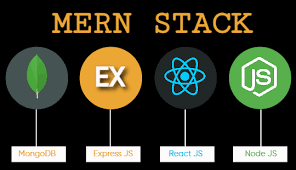
The MERN stack is a powerful set of technologies used to build full-stack web applications using only JavaScript. The acronym MERN stands for MongoDB, Express.js, React.js, and Node.js — four technologies that work seamlessly together to handle everything from the front-end to the back-end of a web application.
Because it uses a single programming language — JavaScript — across the entire development process, MERN is highly efficient, fast, and developer-friendly. It has become one of the most popular tech stacks for building scalable, modern web applications.
What Does MERN Stand For?
-
MongoDB – A NoSQL document-based database that stores data in flexible, JSON-like documents.
-
Express.js – A minimalist and powerful web application framework for Node.js, used to build APIs and handle backend logic.
-
React.js – A JavaScript library for building dynamic user interfaces on the front-end.
-
Node.js – A JavaScript runtime environment that allows you to run JavaScript on the server.
How the MERN Stack Works Together
-
Client-Side (React.js)
React handles the user interface and user interactions. It provides dynamic rendering of components and handles routing on the client side using tools like React Router. -
Server-Side (Express.js + Node.js)
Express and Node work together to process client requests, connect to databases, and deliver responses. Express routes requests and provides APIs, while Node handles execution and runtime on the server. -
Database (MongoDB)
MongoDB stores all application data in collections and documents. It interacts with the backend using drivers like Mongoose, allowing schema-based data modeling in JavaScript.
Why Choose the MERN Stack?
-
JavaScript Everywhere – From database to UI, everything is built using JavaScript, reducing context switching for developers.
-
Scalable and Fast – Ideal for building applications that can grow over time, with strong performance under load.
-
Open-Source Tools – All components of the stack are open-source and supported by large communities.
-
High Developer Productivity – The unified language model and component-based structure lead to faster development cycles.
-
Flexible Architecture – Easily integrate third-party services, libraries, and tools into the MERN stack.
Common Use Cases for MERN
The MERN stack is suitable for a wide range of web applications, including:
-
Single Page Applications (SPAs)
-
Real-Time Chat Apps
-
E-Commerce Platforms
-
Project Management Tools
-
Social Media Networks
-
Dashboards and Analytics Systems
Building a MERN App: Development Flow
-
Frontend Setup (React)
-
Create UI components
-
Manage state using hooks or tools like Redux
-
Use Axios or Fetch API to send requests to the backend
-
-
Backend Setup (Node + Express)
-
Create RESTful APIs
-
Handle routing and middleware
-
Process requests and responses
-
-
Database Integration (MongoDB)
-
Define schemas using Mongoose
-
Perform CRUD operations
-
Secure data and validate input
-
-
Connecting the Stack
-
Test full-stack integration
-
Handle errors and responses
-
Deploy to platforms like Heroku, Vercel, or AWS
-
Pros and Cons of the MERN Stack
✅ Pros:
-
Full JavaScript stack
-
Fast and scalable architecture
-
Great for single-page and dynamic applications
-
Easy to learn for JavaScript developers
-
Strong developer community and resources
⚠️ Cons:
-
Not ideal for SEO-heavy apps without server-side rendering
-
Requires manual setup and configuration in early stages
-
Learning curve if you’re new to full-stack development
Popular Companies Using MERN Technologies
While not all companies use MERN exactly as-is, many use its components:
-
Netflix (React, Node)
-
Uber (Node, Express)
-
Instagram (React)
-
Coursera (Node, MongoDB)
-
Fiverr (React, Node)
MERN vs MEAN: What’s the Difference?
The only major difference is in the front-end library:
-
MERN uses React.js
-
MEAN uses Angular
Both are powerful, but React’s component-based architecture and virtual DOM offer better performance and flexibility in many cases, especially for dynamic applications.
Deployment of MERN Applications
MERN apps can be deployed in a variety of ways:
-
Frontend: Deploy React on platforms like Vercel, Netlify, or as static files on CDN
-
Backend: Use Heroku, Render, or AWS EC2 to host the Express/Node API
-
Database: Host MongoDB on MongoDB Atlas or your own server
-
CI/CD: Use GitHub Actions or other CI tools for continuous deployment
Final Thoughts
The MERN stack is a robust and modern solution for full-stack JavaScript development. With a powerful combination of MongoDB, Express.js, React, and Node.js, developers can build everything from simple websites to complex, scalable web applications — all with a single language.
Whether you’re a solo developer, part of a startup, or working on enterprise-level software, MERN gives you the tools and flexibility to bring your ideas to life quickly and efficiently.
